DD Waiver vs. SLS Waiver: Which One Fits Your Family Member?
Once a family understands that Colorado's disability waivers exist at all, the next question almost always follows fast: which one? The DD waiver vs SLS waiver comparison is one of the most common questions we hear from guardians who have just finished intake with their Community Centered Board and now need to figure out which level of support actually matches their family member's life. Both waivers fall under the state's HCBS-DD umbrella and both open the door to real services, but they are built for genuinely different situations. This guide lays out the difference in plain language, without pretending either waiver is a guarantee of a specific outcome.
Before going further, an honest note: this guide is educational. It cannot tell you which waiver your family member will be approved for, and it cannot promise a timeline. What it can do is help you walk into your next case manager conversation with better questions.
What Each Waiver Is Actually Built For
The HCBS-DD waiver, sometimes just called the DD waiver, is designed for adults who need access to support across the full day, not just at scheduled times. It funds residential services, including host home and group settings, along with day habilitation and other supports that assume a person benefits from consistent, present help. The HCBS-SLS waiver, or Supported Living Services waiver, is built for adults who are ready to live with more independence: in their own apartment, a family home, or another setting where they do not need someone present around the clock, but still benefit from scheduled support, coaching, and check-ins.
Neither waiver is "better." They are built for different starting points, and a good case manager will talk about them in terms of fit, not upgrade or downgrade.
Who Typically Qualifies for Each
Eligibility for both waivers starts the same way: a documented developmental disability and a functional needs assessment (sometimes called a level of care determination) through your Community Centered Board, as outlined in our plain-English guide to waivers, CCBs, and admission. From there, the fit typically comes down to the level and consistency of support a person needs. Adults who need supervision or hands-on assistance throughout most of the day and night tend to be a fit for the DD waiver. Adults who can manage significant parts of daily life independently, with support concentrated around specific tasks like budgeting, transportation, or medication reminders, tend to be a fit for SLS.
What Services Each Waiver Covers
| Waiver | Typical Setting | What It Covers |
|---|---|---|
| HCBS-DD | Host home or group residential setting | Round-the-clock residential support, day habilitation, transportation, and behavioral or medical supports as needed |
| HCBS-SLS | Own apartment, family home, or independent setting | Scheduled supported living services, skills coaching, and check-ins without live-in staffing |
Because the DD waiver assumes a more residential level of support, families comparing settings often want to understand the difference between a host home and a group home as part of this conversation, since both fall under the DD waiver umbrella but feel very different day to day.
What a Typical Day Looks Like Under Each Waiver
It helps to picture the two waivers in terms of an actual day rather than a funding category. Under the DD waiver, a person's morning might include support getting ready, a shared breakfast with a host home provider or housemates, transportation to a day program, and support again in the evening with meals, medication, and winding down. Someone is present and available throughout, even during the quieter stretches of the day.
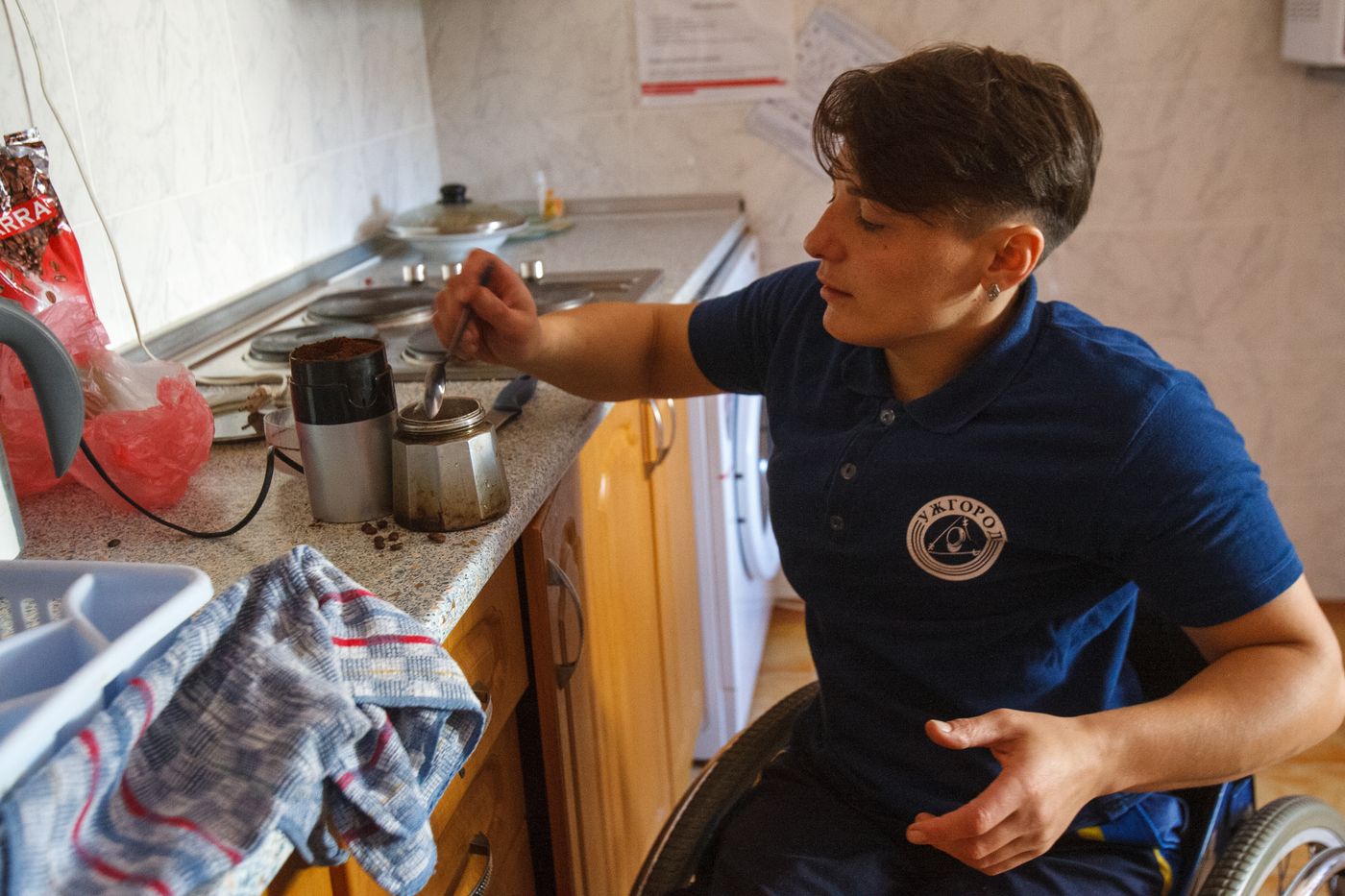
Under the SLS waiver, a person's day might start entirely on their own, with a support worker arriving later for a scheduled visit to help with budgeting, a grocery run, or a ride to a medical appointment, then leaving again once that task is done. The person manages the hours in between independently, calling their support worker or a family member if something unexpected comes up. Neither day is more "successful" than the other. They simply reflect different levels of built-in presence, matched to different levels of need.
How a Family and Case Manager Decide Between Them
This decision is rarely made in a single meeting, and it shouldn't be. A case manager will typically look at the person's current daily living skills, safety needs, medical or behavioral supports required, and the person's own stated goals and preferences. Families know their loved one's rhythms in ways a form cannot capture, and the strongest waiver decisions come from a real back-and-forth between the case manager, the family, and the individual, not a checklist applied from the outside. It is entirely reasonable to ask your case manager to walk through specific, real-life scenarios, not just categories, so you can hear how each waiver would actually apply to your family member's week.
What Happens If Needs Change Later
Needs are not fixed, and Colorado's waiver system allows for movement between waivers when circumstances genuinely change. An adult on SLS who develops new medical or supervision needs can be reassessed for the DD waiver, just as an adult on the DD waiver who builds stronger independent living skills over time can explore a transition toward SLS. Neither move happens overnight, and neither is guaranteed by any specific timeline. What matters is keeping your case manager informed as things change, rather than waiting for a crisis to prompt the conversation.
If you are still early in exploring what residential care and host home matching look like in the Denver metro overall, our complete family guide to residential care and host home matching is a good place to see how the waiver decision connects to the rest of the process.
Not Sure Which Waiver Fits Your Family Member?
We are glad to talk through what we've seen work for families in similar situations. This is an educational conversation, not a sales pitch.
Learn more at Brighter HorizonFrequently Asked Questions
What is the main difference between the DD waiver and SLS waiver?
Can someone switch waivers later if their needs change?
Does the SLS waiver have a waitlist like the DD waiver?
Who decides which waiver is the right fit?
Ready to Talk Through Your Family's Situation?
We work alongside families comparing waivers and settings every day. Start the conversation whenever you're ready.
Start a conversationSources: Colorado Department of Health Care Policy and Financing (hcpf.colorado.gov); Developmental Pathways (dpcolo.org); Colorado Department of Public Health and Environment (cdphe.colorado.gov).
Related reading: Getting Started: Waivers, CCBs, and Admission in Plain English, What the Disability Waiver Waitlist Really Means for Colorado Families, and Host Home vs. Group Home: What's the Real Difference for Your Family?